Sunday, February 21, 2021

Dancing Light

Sitting outside on a February evening, appreciating the warm light of the setting sun, Shari takes a video shot. On playback, a light can be seen, sometimes a single spot of green, sometimes splitting into several spots all clustered together, an aura around them.

The camera is pointed to the sunset, and the light disappears as the camera moves away from the sunset, but the light does not move with the camera. It seems to have a life of its own.


Wednesday, February 10, 2021

Cooper's Hawk

We see hawks often enough, but not hanging around our swimming pool. We wondered whether this Cooper's hawk was thinking about taking a dip. (It didn't.)


Saturday, January 23, 2021

A New Way of Reading

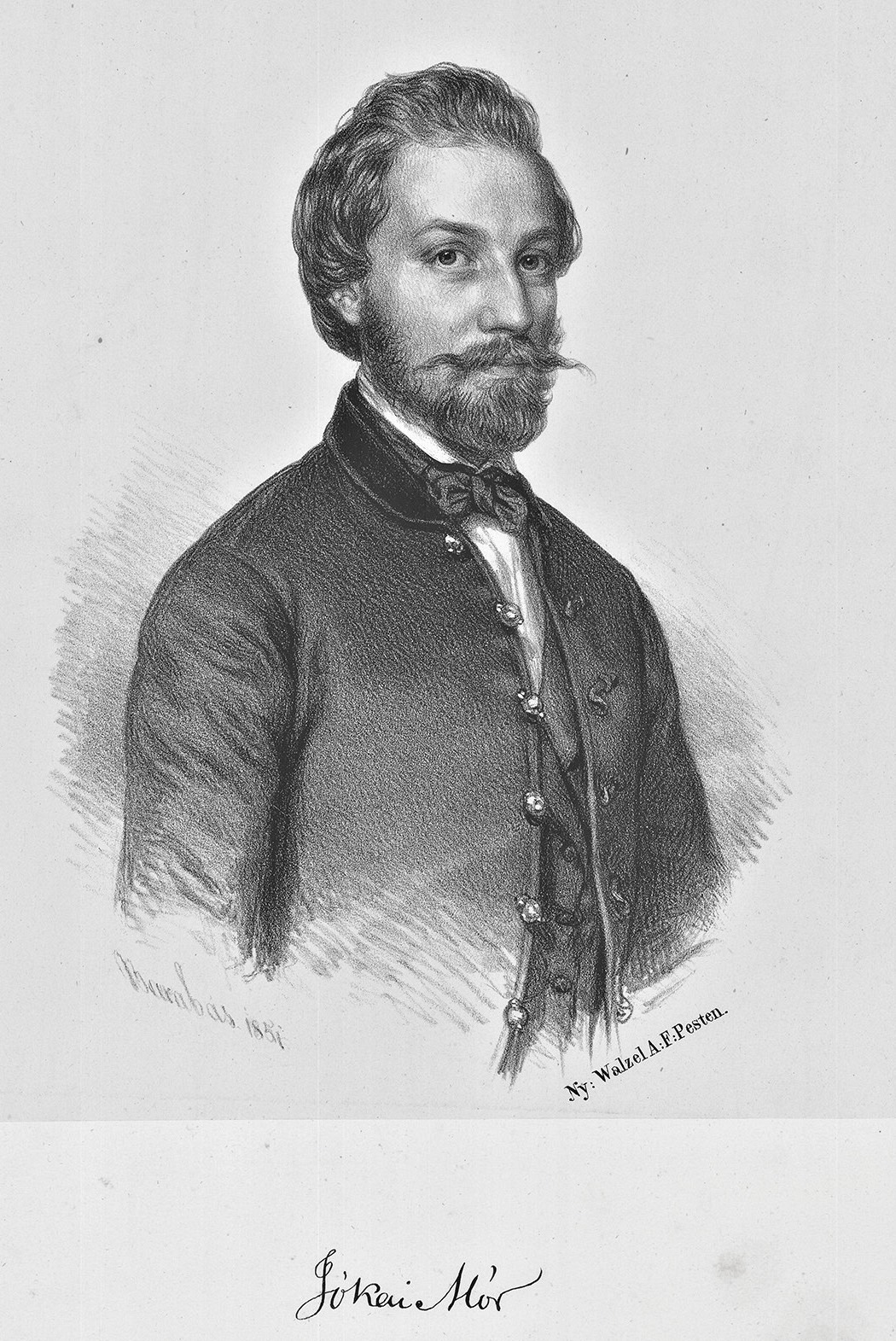
Mór Jókai
Growing up in Sydney, then through high school in Seattle, I read voraciously. Enid Blyton wrote over twenty books in the children's series, The Famous Five, and another seventeen in The Secret Seven series. I probably read most of them, if not all. Then my sister was reading breast-heaving novels by Georgette Heyer who wrote over forty-eight of them. I probably red six or a dozen.

I graduated to several novels by Dickens, Jane Austin, Emily and Charlotte Brontë, and even Thackeray's Barry Lyndon before tackling Herman Hesse's Steppenwolf and Magister Ludi, Tolstoy's War and Peace, and Dostoevsky's Brothers Karamazov, Anna Karenina, and Crime and Punishment.

I would devour novels. It took me only three weeks to read War and Peace, one day to read Jane Eyre, and a week to get through Tolkien's Lord of the Rings trilogy. I was that eager to find out what happens at the end.

Law school cured me of the reading habit. I had to read so many legal opinions, my eyesight grew weak and, frankly, I was burned out. Pretty much all I read was non-fiction. In more recent years, thanks to the encouragement of my sister who had passed on those Georgette Heyer novels, I became fascinated reading a translation of Les Miserables. It took me a couple of months or more to get to the end.

Two years ago I tackled Egri csillagok ("The Stars of Eger"), the Hungarian historical novel which is one of the most widely read books in Hungarian literature. I purchased an English translation, became dissatisfied with it when I compared it to the original Hungarian text, and spent a year on my own translation. (Copies available at Lulu.com.)

As I approach retirement, I am thinking maybe I should take up reading more seriously. I spent $1.99 on another Hungarian novel, an e-book version of a 19th century English translation of another Hungarian historical novel, The Golden Age in Transylvania by Mór Jókai. That was slow reading. I was bothered by the translation. As with Egri csillagok, I downloaded the Hungarian original, Erdély aranykora, as a text file from the web. 

I became dissatisfied with the Victorian English translation as I compared it to the Hungarian original and decided to make my own translation. That was twenty-four days ago. I just finished the translation this morning. The initial hard work of translation is done and my eagerness to find out what happens at the end has been satisfied. At least for this novel, I not only devoured it, I ruminated over the meaning of each sentence before going onto the next.

The novel really is a page-turner. It is a written historical novel set in the semi-independent Principality of Transylvania in the years 1661-1674.

It is also a psychological novel with historical characters that have depth and evolve.

In some chapters, the novel is a fantasy with detailed descriptions of exotic oriental pleasure palaces set in the remote mountains of Transylvania and the northern Carpathians. Translating Jókai's descriptions of forest streams, craggy mountains, polished rock cirques, and even an avalanche brought back my own memories of hiking in the Cascades and Olympic Mountains. Clearly, the author had visited and observed such places. The Victorian translation either omitted these vivid descriptions or condensed them into a short paragraph.

A Reclining Odalisque,
by Gustave Léonard de Jonghe, c. 1870
Then there is many a passionate breast-heaving scene, which portions the Victorian translation also omitted, and a generous sense of comedy, sometimes slapstick, often subtle. Jókai knew very well how to appeal to a broad audience of human emotions.

Chapters bounce back and forth in time and from scene to scene. Connections develop as the novel progresses, and seemingly inconsequential details and the occasional obvious clue assume necessary significance in a later chapter. The chapters are like scenes in a play, and Jókai's descriptions of the characters' emotions and thoughts are like a playwright's directions to actors on a stage.

The fantasy scenes are an allegory and the themes are hubris and the seductions of wielding and manipulating power. It is a novel about a national tragedy.

Mór Jókai in his study
Jókai participated in ill-fated Hungarian war of independence, 1848-1849, and kept a low political profile for the following fourteen years during which he wrote some thirty novels. The Golden Age in Transylvania was published in 1852. After the Great Compromise of 1867 established the dual monarchy of Austro-Hungary, he was even more prolific: several hundred volumes. His novels were translated and very popular in Victorian Britain, even with the Queen herself. 

There is lots of material to satisfy my need for a hobby. I have a new way of reading. Instead of quickly reading a novel to simply take in the plot, having to translate slows me down to appreciate and admire the details.

The hard cover of my treasured Hungarian-English dictionary is beginning to wear and tear at the folds. I am addicted to not only Google translate (mis-translations often great for a good chuckle), but also to Google's Hungarian dictionary that often holds clues to decipher archaic or unusual Hungarian words. Often I had to get up and pace, maybe make another cup of coffee, before the meaning of a baffling, obscure and convoluted (to an English reader) Hungarian sentence pops into my mind.

As I walk Nazar the Wonder Dog in the wash, my mind is full of prose.

Saturday, November 21, 2020

A Closer Look at Our Little Acre

We got many compliments on the previous edit, and I am learning to slow down and focus in with my video camera. This edit reflects more detail.

The Sonoran Desert has shapes, colors, and textures large and small. On our own little acre where we have cleared and planted, each plant has become a familiar friend.


The soundtrack is Brahim Fribgane playing the oud. Born and raised in Morocco, Brahim Fribgane brings to his music the rich and varied musical styles he grew up with - North African, Gnawa, Berber, Arabic and Andulusian music. His oud style ranges from the clear, "singable" melodies of folkloric Berber songs to beautifully complex and soulful Arabic music.

Monday, November 16, 2020

November at San Simeon

The heat of summer is forgotten as we wear long pants and a sweater in the mornings, then shed layers as the sun in a cloudless blue sky heats up the days. We had some rain a week ago. One hardy creosote bush responded with flowers. The devil's tongue barrel cactus is budding with deep red flowers.

We have spotted the owl in the eucalyptus tree several times. Judging by the offal on the park bench directly below its perch, and the scattered feathers on the driveway, the owl has been a successful hunter.


Much thanks for the many kind comments.

"Thanks Shari for sending the video and well done Tom-you certainly capture the desert garden, loved the music and was that an owl because it was great capture!" 

 " OMG. ... This is amazing, beautiful, sculptural, spiritual, melodic, under the watchful eye of the owl, and the moons glow. Wow. The hardscape, the stately cactus the protector of the many pots, and steps of continuous beauty. You have created, recreated the essence of Turkey, Australia, India etc, all them warmer exotic places that I have unfortunately not gotten to yet,. Congrats on so much hard work, and grace and beauty that you have shared with us and all that come by your place." 

 "What a beautiful garden that we would like to discover for real !" 

"Very beautiful yard, vegetation and even an owl! I love the editing with such lovely music as always." 

"WONDERFUL!!!! I really plan to see all that/YOU next… May? I hope I hope!!!!" 

 "One word: Fabulous!! makes us wish we were there." 

"🙏🏼 What a masterpiece you’ve created! The video is an amazing meditation in the midst of chaos." 

"Lovely lovely lovely! Thank you!!!" 

"So very nice! Great job, Tom. Such a perfect sanctuary! Thanks for sending, Shari! Always love seeing your place, in real life or in pictures!" 

 "Thank you for sharing views of your magical desert gardens. It's raining cats and dogs here--has been for days and no end in sight. ... It's such an interesting mix of plants, pots, whimsical items, paths, walls, furniture and level upon level of beauty. You two are sensational stewards of the land." "A lot of work but looks beautiful and well done!" 

 "Your garden arts are amazing, so to know you think Tom’s display being wonderful is quite the compliment!" 

"What a wonderful tour of your Oasis. Wish I could teleport down there for a few days and suck up the sounds and smells you capture so well." 

"Love the movie….the ending is WOW. Your place is so wonderful….I love it and miss my time there." 

"Thanks, that’s wonderful., and so much warmer and sunnier than say, Whidbey Island November-June. You’re lucky to have all those wonderful rocks to play with. " 

 "WOW.........put me into another place inside and out. Especially like the owl and crescent moon at the end of day. Thx a million for sharing your WONDER FULL garden."

Monday, October 19, 2020

Saint Simon

It's only a coincidence, but then, so many coincidences are intriguing.

We live on San Simeon Drive. It's named after a San Simeon Ranch that used to be in this area. The Spanish had a nice custom of naming things after saints. In this case, the namesake is Saint Simeon the Stylite, a Fourth Century ascetic saint who achieved notability for living 37 years on a small platform on top of a pillar near Aleppo in what is today's modern Syria.

Since we ditched the idea of dish/cable television, Shari and I converted to the internet. We already had subscribed to Netflix and Prime. We exchanged DirectTV for a subscription to Britbox.

Much of the time we simply watch YouTube. It's amazing what you can find on YouTube — intelligent documentaries, house buying in the British and French countryside, travel programs, early music concerts, old movies and television shows. We've watched all the Sherlock Holmes movies with Basil Rathbone and many of the Sherlock Holmes television programs with Ronald Howard.

I remember watching television as a kid in Australia. By golly, the original Aeroplane Jelly commercial is on YouTube. Just search for it. The 1950's Robin Hood series starring Richard Greene is there, as is Jet Jackson — but neither has aged that well.

One day I searched "The Saint". Shari vaguely remembered the TV show. I have specific memories watching the program in Sydney on the family boob tube — in glorious black & white. Which it is.

We have been watching an episode of The Saint in the evenings ever since. It's a bit of a dinner routine. Many episodes of the first season are uploaded to YouTube, plus a few programs from later seasons, including color from seasons five and six.

We ran out of The Saint episodes that we hadn't seen. Although many of the 114 episodes (six seasons, 1962 to 1969, go figure) are on YouTube, only about a dozen are watchable. Most are in a strange, unwatchable format posted, no doubt, by the copyright owner: a frustratingly small screen set within a distracting background screen.

Frustrated, I searched online for DVD's.  They exist. The entire The Saint series on 33 (thirty-three) DVD's. Prices from $44 to $150. We went with $44 via eBay. No problem. Less than a week later, I ripped all 114 episodes and loaded them onto my external hard drive.

We dial up an episode at whim on our big screen TV through our Roku USB input.

I have to be honest. I never liked Roger Moore in his later role as James Bond. He always seemed out of shape.

When I first searched for The Saint on YouTube, I was curious why we liked the show so much in Australia. Well, Roger Moore as Simon Templar is dashing and debonair, lithe and svelte. No question. His expressions are timeless; the stories are always light, entertaining, and have a good ending.

Each show begins with Simon's introductory monologue to the camera, then someone recognizes him by name. Camera re-frames on Simon to leave space above his head where a halo suddenly appears. Simon looks up, as if at his own halo, and smiles. Theme music plays. The episode is introduced.

Although almost all episodes were shot in English studios, camera crews took establishment footage from all over the world to create a masterful illusion of international intrigues in London, Paris, Rome, Buenos Aires, Mexico, Costa Brava, Cannes (of course), Canada, Bahamas, New York, Athens and Cornwall. It's fun just to see vintage 1960's cars, trucks and buses on the roads.

Simon Templar is a gentleman who doesn't back off from a fistfight, and who is never taken in by a beautiful woman.

Simon drives his Volvo sports car (license plate ST-1), plays opposite beautiful women and cunning men, has an obligatory fist fight or two in each episode (much more convincingly playful than Roger as Bond), and, against all odds, mischievously solves the problem of the day in a very honorable, gentlemanly, and unexpected manner — nay, even saintly.

So here at San Simeon, we have become enamored of The Saint Simon Templar. We also like living on a small dead-end street named after Saint Simeon the Stylite.

Coincidence?