Showing posts with label Writing. Show all posts

Sunday, March 13, 2022

Inspiration

Another morning in the Desert. It's late winter in the Finger Rock wash where I take Nazar the Wonderdog for his early morning saunters.

A hummingbird sits on topmost bare branch of an acacia. A female red cardinal makes its call. I hear javalinas grunting and wait with Nazar to catch a glimpse of the pack. A Gila woodpecker hammers away on a utility pole. A rabbit forages on greens by the side of the road. Doves and a phainopepla sit on electrical lines studying their surroundings. Cactus wrens sit on their adopted saguaros.

I often tell the story of how this city boy, at age forty-seven, moved to the forests of Whidbey Island. For the first time I saw deer, coyotes, rabbits and owls — even the occasional eagle circling in the sky. When we moved to Tucson, I thought living among such wildlife would be a thing of the past. I was mistaken.

I see more varieties of wildlife, and more of them, here in the Desert than I ever saw on our Whidbey Island ten acres. In addition to the variety I saw yesterday morning within the space of twenty minutes, we often see coyotes, wrens, flycatchers, finches, king snakes (we pranam to them), rattlesnakes (we give them wide berth), coachwhip snakes (stunning colors), Gambel's quail, brown and black haired squirrels, ground squirrels, small mice (true masters of tunneling), bobcats, bats, vultures, Harris hawks, owls, jack rabbits, lizards and butterflies of all sizes and shapes, roadrunners, the occasional flight of herons, and during monsoon, toads (unpleasant croaking), tarantulas (scary but harmless), all manner of beetles, and even a desert tortoise. Less common around our house, but frequent in the nearby canyons, are deer, mountain lion, coatamundi, Gila monsters, and bighorn sheep, to name a few.

They inspire me to write.

That same day, my sisters and I took our grand-niece and grand-nephew to the Tucson Festival of Books. The Festival dates back to 2009 and is held on the University of Arizona campus. It started with some 450 authors and presenters, 50,000 visitors, and 800 volunteers. Since then, the visitors have tripled.

We got there before the scheduled opening time. The campus was already crowded. The quad on the campus, several acres of lawn, was covered with hundreds of booths. Our young niece was interested in getting an autograph from one of her favorite children's books authors. We found the classroom in the Education Building and listened to a panel discussion among five authors and illustrators. Nice people. Promoting their books.

They were all nice people. Publishers, hundreds of authors, the volunteers who helped people find their way, and the crowd. It's not easy to become an author accepted by a publisher. You need not only a good book, it has to be in a popular subject matter, you have to find your way through the maze of submittals and agents, and even if you are published, it's still pretty much up to you to promote your book and yourself. Which is why I self publish.

It was a bit daunting to see so much promotion. My morning walks are more inspiring.

Saturday, January 23, 2021

A New Way of Reading

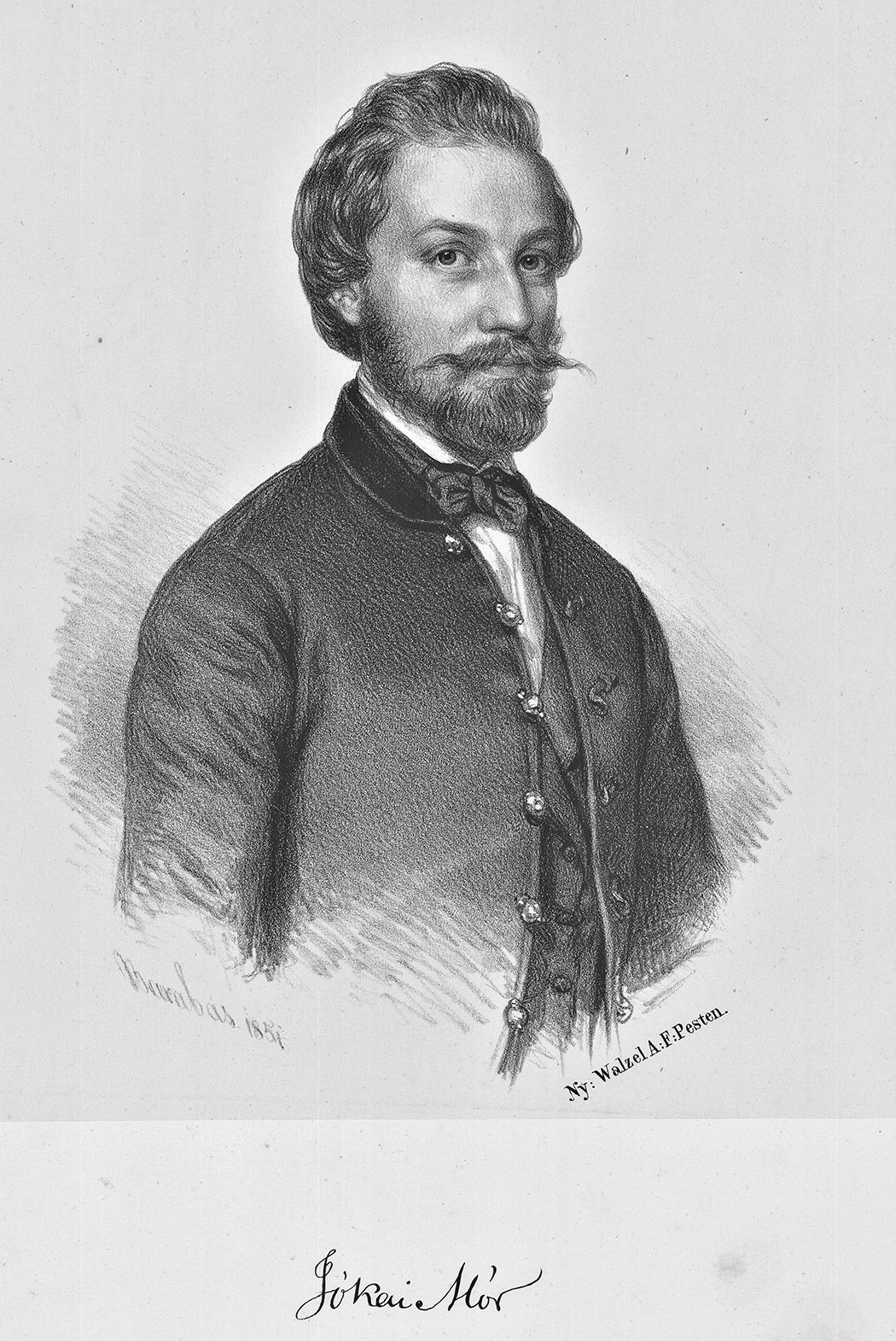
Mór Jókai
Growing up in Sydney, then through high school in Seattle, I read voraciously. Enid Blyton wrote over twenty books in the children's series, The Famous Five, and another seventeen in The Secret Seven series. I probably read most of them, if not all. Then my sister was reading breast-heaving novels by Georgette Heyer who wrote over forty-eight of them. I probably red six or a dozen.

I graduated to several novels by Dickens, Jane Austin, Emily and Charlotte Brontë, and even Thackeray's Barry Lyndon before tackling Herman Hesse's Steppenwolf and Magister Ludi, Tolstoy's War and Peace, and Dostoevsky's Brothers Karamazov, Anna Karenina, and Crime and Punishment.

I would devour novels. It took me only three weeks to read War and Peace, one day to read Jane Eyre, and a week to get through Tolkien's Lord of the Rings trilogy. I was that eager to find out what happens at the end.

Law school cured me of the reading habit. I had to read so many legal opinions, my eyesight grew weak and, frankly, I was burned out. Pretty much all I read was non-fiction. In more recent years, thanks to the encouragement of my sister who had passed on those Georgette Heyer novels, I became fascinated reading a translation of Les Miserables. It took me a couple of months or more to get to the end.

Two years ago I tackled Egri csillagok ("The Stars of Eger"), the Hungarian historical novel which is one of the most widely read books in Hungarian literature. I purchased an English translation, became dissatisfied with it when I compared it to the original Hungarian text, and spent a year on my own translation. (Copies available at Lulu.com.)

As I approach retirement, I am thinking maybe I should take up reading more seriously. I spent $1.99 on another Hungarian novel, an e-book version of a 19th century English translation of another Hungarian historical novel, The Golden Age in Transylvania by Mór Jókai. That was slow reading. I was bothered by the translation. As with Egri csillagok, I downloaded the Hungarian original, Erdély aranykora, as a text file from the web. 

I became dissatisfied with the Victorian English translation as I compared it to the Hungarian original and decided to make my own translation. That was twenty-four days ago. I just finished the translation this morning. The initial hard work of translation is done and my eagerness to find out what happens at the end has been satisfied. At least for this novel, I not only devoured it, I ruminated over the meaning of each sentence before going onto the next.

The novel really is a page-turner. It is a written historical novel set in the semi-independent Principality of Transylvania in the years 1661-1674.

It is also a psychological novel with historical characters that have depth and evolve.

In some chapters, the novel is a fantasy with detailed descriptions of exotic oriental pleasure palaces set in the remote mountains of Transylvania and the northern Carpathians. Translating Jókai's descriptions of forest streams, craggy mountains, polished rock cirques, and even an avalanche brought back my own memories of hiking in the Cascades and Olympic Mountains. Clearly, the author had visited and observed such places. The Victorian translation either omitted these vivid descriptions or condensed them into a short paragraph.

A Reclining Odalisque,
by Gustave Léonard de Jonghe, c. 1870
Then there is many a passionate breast-heaving scene, which portions the Victorian translation also omitted, and a generous sense of comedy, sometimes slapstick, often subtle. Jókai knew very well how to appeal to a broad audience of human emotions.

Chapters bounce back and forth in time and from scene to scene. Connections develop as the novel progresses, and seemingly inconsequential details and the occasional obvious clue assume necessary significance in a later chapter. The chapters are like scenes in a play, and Jókai's descriptions of the characters' emotions and thoughts are like a playwright's directions to actors on a stage.

The fantasy scenes are an allegory and the themes are hubris and the seductions of wielding and manipulating power. It is a novel about a national tragedy.

Mór Jókai in his study
Jókai participated in ill-fated Hungarian war of independence, 1848-1849, and kept a low political profile for the following fourteen years during which he wrote some thirty novels. The Golden Age in Transylvania was published in 1852. After the Great Compromise of 1867 established the dual monarchy of Austro-Hungary, he was even more prolific: several hundred volumes. His novels were translated and very popular in Victorian Britain, even with the Queen herself. 

There is lots of material to satisfy my need for a hobby. I have a new way of reading. Instead of quickly reading a novel to simply take in the plot, having to translate slows me down to appreciate and admire the details.

The hard cover of my treasured Hungarian-English dictionary is beginning to wear and tear at the folds. I am addicted to not only Google translate (mis-translations often great for a good chuckle), but also to Google's Hungarian dictionary that often holds clues to decipher archaic or unusual Hungarian words. Often I had to get up and pace, maybe make another cup of coffee, before the meaning of a baffling, obscure and convoluted (to an English reader) Hungarian sentence pops into my mind.

As I walk Nazar the Wonder Dog in the wash, my mind is full of prose.

Saturday, December 7, 2019

Why Is News Irritating?

I'm not sure which came first, advertising or the news, but in our modern times, I know advertising comes first way too often. News is a tease to get you reading or watching long enough to suffer the advertisements. The different varieties of news, including investigative reporting, magazine articles, TV documentaries, and weather forecasts, all indulge in exaggeration and hide-the-ball for the purpose of advertising.

It starts with the headline. Often it's a question. A question as a headline? "Nixon, Clinton, Trump, Why Is Impeachment More Common?" (USA Today, 12/7/19). "Does the world need any more large zoos?" (BBC News 12/6/19) Questions are safe. A statement might take a position that might dissuade someone from following the trail of ads.

Then there are the headlines that cater to the publication's reader base. My favorite culprit is Huffpost where partisan hyperbole is the business model. "Maddow Nails Hypocrisy of GOP." "Ex-Ethics Chief Roasts Trump-Defending Republicans With A List Of Future Quotes [sic]." Like, whatever Maddow or an Ex-Ethics Chief says will "nail" or "roast" anything for the GOP leadership?

I could quote and endless number of hyperbolic headlines from Fox Noise, but I cannot stomach that nonsense long enough to even skim its headlines. Tabloid Fox Noise, by far and away, is the most financially successful exploiter of any news base. It thrives on ignorance.

The effect of exaggeration is to mislead. News should not mislead.

Then there is the all too familiar clickbait. I first encountered the term only recently; maybe a couple of years ago. Clickbait is all over Facebook and, if you read news online, there are "sponsored" links all over the pages. If one clicks on the link, one enters the rabbit hole of hide the ball, if I may mix two metaphors. The clickbait headline is a tease that leads a person through an existential journey through a maze of endless advertisements to read another tease and search for the link to the next page where another tease is embedded in another maze of advertisements — often ads for other clickbait sites. If there is a point to a clickbait article, assuming you have the fortitude to find it, I can assure you it is a huge letdown. Exaggeration.

Granted, clickbait sites are not traditional news sites. But they operate similarly all too much: suck in the readers long enough to blast them with advertisements.

Which leads me to my major frustration: well written and substantive articles on interesting subjects where I have to find the ball.

I often wish I had taken a journalism class at (Theodore) Roosevelt High School (and drama, but that's another post). So I am no expert on how good investigative news articles should be written. But I know how I like to read any information: tell me what you are going to tell me; tell me; then tell me what you told me. The writer should be knowledgeable enough to summarize.

Ah, but to summarize is to make a statement that might dissuade someone from wandering through a forest of anecdotes followed by a trail of no doubt relevant details before getting to the point. I hate articles that begin with a touchy-feely anecdote, or any other anecdote for that matter. Start with the point and let me decide whether I want more information. Oh, but then I won't get to see the advertisements.

Now it is quite possible that there are people out there who enjoy reading investigative reporting, or eagerly suffer through Big Pharma advertisements to get to the weather forecast for the following day. They work like novels. The opening is a tease in the form of an anecdote, then curiosity and patience lead the reader to savor the verbal trail of carefully assembled information to, hopefully, a satisfying climax. Ah, minutes later the reader is educated and can conclude that fifty years ago Big Oil had its own scientific evidence that burning fossil fuels causes climate change, which evidence they promptly buried. Or, in the world of History Channel documentaries and their ilk, why  dinosaurs went extinct, or Atlantis sunk, or what was discovered in Caribbean waters. Or the chance of rain tomorrow.

I don't have the patience for exaggeration or hide the ball.

Friday, August 23, 2019

Fighting, Fighting

I have only fifteen pages left to translate out of five hundred fifty-five. I am towards the end (obviously) of the final, all-out Turkish assault on Eger Castle, October 14, 1552. That's about the fourth major assault over the thirty-nine day siege by some 40,000 Ottomans. The castle defenders number about 2,000. Or at least they did when the siege started.

The Women of Eger,
painting by Bertalan Székely
There is a great deal of mayhem in this Hungarian historical novel published in 1899, Egri Csillagok (Eger Stars). Most recently during this final assault — as I described to Shari yesterday afternoon, then again to Ray and Judy before going out for dinner — a widowed mother, Lady Balogh, her young son having just been killed in the fighting, grabs a sword and runs to the bastion. Meanwhile, the captain of the castle, István Dobó, wrestles with a giant Turk who falls off the platform by the bastion onto the cobblestones below. The Turk loses his helmet and gets up just as Lady Balogh is running by. Enraged, she swings her sword and, as the novelist, Géza Gárdonyi, writes, severs the Turk's head from his neck.

The siege takes up only the last half of the novel. The first half begins with two children skinny dipping, five-year old Éva and seven-year old Gergely. They are captured by a one-eyed janissary named Yumurdjak. What follow in that first half of the novel are descriptions of life in 16th Century Hungary and Constantinople. The last pages will surely complete the story of Yumurdjak. Éva and Gergely, now grown up and married, through a highly unlikely set of circumstances only a novelist can weave, are both fighting on the ramparts against the Turks, the husband not knowing his wife is there. It's a page-turner.

It is a historical novel. The siege of Eger really happened. Only two years later, Sebestyén Tinódi was composing ballads chronicling the heroism of the Eger defenders. The characters the novelist develops in the first half of the book actually existed and fought at Eger. Their names and deeds are known and were recorded, not just by Tinódi, but also in records kept during the siege by the aged castle steward, János Sukán. We know the names and deeds of soldiers and officers, blacksmiths, millers, the two priests, and the mayor of Eger, the inventory of supplies the castle steward maintained, and that the castle had thirteen barbers. Back in those days, the novelist explains, there were no doctors. Barbers washed, sewed and bandaged wounds. Someone counted 12,000 cannonballs inside the fortress, not including those embedded in the walls or those the defenders hurled down on Turks climbing siege ladders.

Granted, the first half is more novel than history, but even so the historical setting is accurate. The brutal suppression of the peasant revolt led by György Dózsa, the catastrophic Battle of Mohacs, and the Ottoman ruse to occupy Buda are all facts. And in the hands of a skilled novelist, which Gárdonyi certainly was, this brutal history is strikingly vivid.

The Siege of Eger Castle
painting by Béla Vízkelety
There is a great deal of mayhem. Gárdonyi is constantly weaving in colorful details that bring the medieval period alive, together with humor — sometimes black, sometimes almost slapstick, particularly his use of a gypsy character, Sárközi, for comic relief. But there is a great deal of mayhem.

And it's that mayhem that makes me reflect and write this blog post. It's the realization that we haven't changed all that much over the last six centuries.

I'm flipping through Netflx documentaries and see Rick Steves in Europe. I flip through his episodes, passing over four or five travel shows set in Germany, and stumble upon Bulgaria. ¿Bulgaria? It's one of those Balkan places loaded with centuries of animosity and bloodshed. Being raised Hungarian, I have such associations. I'm curious. The half hour program is delightful. You know, there is a lot of beauty and culture in Bulgaria.

So, someone remind me. Why do we hate and slaughter each other?

Monday, July 1, 2019

Eger Stars

Its fascinating to be immersed in another’s world; another’s fantasy world. The images, characters, costumes, and customs linger in the mind, if only for a short time, like a dream.

A good movie can draw me in. Each movie and TV program is someone's creation of a re-playable dream. Most are silly endless chase scenes, unnecessarily violent, unduly salacious, and/or simply boring. I prefer to go to bed and create my own dreams. But some movies draw me in, typically period pieces, foreign settings, intelligent dialogue, and gorgeous cinematography.

Nowadays we watch movies on a television with all the distractions of domestic life. When we were young, a trip to the movie theater was special: vivid colors projected onto a huge screen in a darkened theater supported by a sound system that moved across the walls. I remember receiving printed programs, even assigned seating, to showings of Lawrence of Arabia, The Sound of Music, and the Walt Disney Sydney premiere of Darby O’Gill and the Little People. Remember the after matinee surprise of emerging from the theater to see sunshine illuminating a familiar world that, for an instant, seemed very strange?

The fact that we were younger then is relevant. We are more impressionable before our imaginations became prejudiced with the familiarity of ordinary reality.

Think of reading books. They too are someone's creation of a dream, another world. Reading books is uncanny. What is it about reading that inherently triggers our imagination? They are only printed letters forming words that the eye reads and the mind silently interprets as sounds. There is no soundtrack and no moving images. Illustrations play a minor role compared to cinematography. Yet as abstract as the printed word is, and although reading requires more effort than passively watching moving images accompanied by sound, books are more engrossing. Images, characters, customs, even costumes and scenery, all conjured up with twenty-six outlined shapes symbolizing sounds, linger in the mind.

All art does that. Music, the most abstract and powerful form of human creation, painting, sculpture, architecture, jewelry, gardening, cooking, even straightening up the house are expressions of creativity and opportunities to be drawn into a different world.

But it's a book that is now lingering in my mind and competing with the ordinary around me. Actually, it's not just a book. It's a triple or quadruple whammy of a classic novel, a period piece, and an iconic Hungarian story in Hungarian, a language intimately familiar to me from childhood which, anymore, I use talking to myself or the dog, or composing emails to my cousins in Hungary.

I am laboriously translating Egri Csillagok (Stars of Eger) by Géza Gárdonyi and originally published in 1901. It begins in 1533 and ends in 1552 with a small Hungarian force defending the fortress of Eger from a large army of Ottoman Turk besiegers. It's required reading for a Hungarian education.

I have a bad habit with reading, I read quickly in order to get the plot. When I was in high school, I read Jane Eyre in one day; War and Peace in three. I rarely slow down to appreciate style or description. Which is why I do not read Hungarian. It’s a language I know from simple conversation. I was never schooled in it. I'm impatient. Sentence structure is different, the relationships of words are embedded in suffixes, strokes and dots over vowels change pronunciation and meanings, and my vocabulary is about third grade, at best.

Fortunately, many years ago my Uncle Zoltán gifted me with a two-volume Hungarian-English dictionary, each volume some twelve hundred pages of eight point font. It is invaluable. I relied upon it extensively to translate my father's memoirs. Since then, Google Translate has become most helpful, but one has to be suspicious and cross-check with a real dictionary. Still, Translate is a time saver for me because it helps with spelling and I know enough Hungarian to recognize when Translate is off base. I have a great story of my cousin's email greeting to Shari, kezit csókolom (“I kiss your hand”) translated as “I handcuff you.” In fact, I just plugged in kezit csokolom (no accent over the “o”) and got “hands with chocolate” in return. Well, if you know a little Hungarian, you would never confuse csokoládé (chocolate) with csókol (kiss), Hershy’s notwithstanding.

I tried reading Egri Csillagok in Hungarian decades ago and gave up after a dozen pages, and even then I barely got the gist of what was going on. I am too impatient to look up two or three words per sentence, then spend time figuring out how they are related: which word is subject, what is the action and what the object, and who belongs to whom. There was no English translation at that time.

As I approach my golden years of retirement, I need hobbies. Why not give Egri Csillagok another try? I looked for an English translation. All that is available are used, hardcover editions running thirty or more dollars a copy. The only available ebook was in Hungarian. I got it. My mind clouded over trying to read and understand. I realized that to read it, I had to take the time and the trouble to write down an English translation. Why not translate the entire book? I managed to translate my father’s writing, I have my dictionary and Translate, and I boast about using my Hungarian skills two years ago when I was in Budapest and visiting cousins in Hungary.

So off an on for the last fortnight I have been translating Egri Csillagok into English. Actually, it’s been more than off-and-on because when I am “on” it's very intense. I am immersed in Hungarian text for many hours at a time, figuring out the meanings of literary words, even medieval Hungarian words and archaic Hungarian expressions. Fortunately, Gárdonyi's prose is elegantly simple, often terse, but that still leaves plenty to decipher.

I was about a tenth of the way through when I decided to splurge and buy the hardcover English translation. I was apprehensive. For several days after the book arrived, I didn't open it, nor did I work with the Hungarian ebook. I was afraid that reading it in English would be too easy and would detract form my self-imposed discipline. In turn, I was afraid that the translation would take too long and have little value if there was already a good one. But I had already collected twenty or more Hungarian words highlighted in yellow for which I could find no translation. So I turned to the English book.

Fortunately, it’s a flawed translation. Although the Hungarian is mostly all there and translated, Mr. George Cushing felt it necessary to contribute his inventions to Gárdonyi's novel. At first I thought that maybe the Hungarian ebook I had purchased cheap from Walmart and Kobo had been dumbed down. I found another ebook version on a Hungarian library website and downloaded it. It is identical to the Walmart-Kobo version. Son of a gun. In addition to the pastime pleasure of translating an interesting Hungarian story, my translation would not only be more faithful to the original, it could be made available as an ebook.

I use Cushing’s version as resource to translate the occasional word (which I cross-check with my English-Hungarian dictionary volume) and, in the odd sentence, to occasionally check for relationships of who is doing what to whom.

What is amazing to me is becoming more familiar with reading Hungarian. My vocabulary isn’t increasing appreciably, at least not so far. I find myself looking up zarándók (pilgrim) again and again, but maybe with repetition and time, words and meanings will attach themselves in my mind. But it has become much easier for me to recognize and read familiar words whose sounds I know but whose spellings are unfamiliar with accented vowels and odd combinations of consonants.

Most amazing of all, I find myself immersed in a Hungary of the 16th Century with wagons, horses, swords and clumsy guns, castles and fortified village houses, children skinny dipping, peasant villages and paprikás stews cooking in cauldrons over fires, dusty, rutted cart trails, brutal janissaries and marauding akindji raiders, vitéz (heroic, Hungarian, of course) fighters, Catholic, Protestant and Moslem adversaries, and intrigues and names familiar from Hungarian history and geography.

It’s a fascinating world. The images, characters, costumes, customs and Hungarian words linger sweetly in my mind.

Wednesday, June 26, 2019

Reflections on Jason and Argonauts

Like Odysseus lashed to the mast, but perhaps more like Jason with his fellow Argonauts sailing through the Bosporus past Sirens and Crashing Rocks between Scylla and Charybdis on their journey through the Euxine Sea in their quest for the fabled Golden Fleece of exotic Colchis, I have passed through the Gates of Medicare and now the Gates of Social Security Full Vesting on my quest for the Golden Fleece of Retirement. Such is the passage of time marked by birthdays.

There are many more adventures ahead as I sail the Black Sea with kith and kin, wending by, through and around a cast of fellow laborers, restaurant servers, competing horseless chariot drivers, and innumerable extras towards my mythical goal.

The Golden Fleece of Retirement remains unattained as the habits and rewards of my professional if surreal labor, not to mention the daily chores of tending furry and floral children, constrain and bind. Ah! But to sever the knots! To be carefree and revel in pastimes of . . .

. . . not bloody likely.

The adventures, boredoms, frustrations, perils and decrepitudes of traveling life are without end. But I do have fellow Argonauts, heroic kith and kin with whom souls are interconnected, fellow characters who have cast ourselves together in this play of consciousness. They are my inspiration, sources for my astonishment, admiration and encouragement in this reverie we call life.

I hope to still write another book or two, marvel at the wonders of creation and our cultural histories, participate in foodie gatherings with the best of friends, record, edit and narrate more video documentaries, plant and nurse cacti and agaves, and cherish nieces, nephews, their creations and progeny. Hopefully, there will be less need to social-post expressions of disgust at the less wholesome aspects of our humanity. But the meaning of life remains clear: do something, anything.

And always, nourishing me from within, is the actual experience and subconscious certainty of the Divine Play which illuminates all phenomena as equally known and equally unknowable.

My sincere thanks to all shipmates on the Argo vessel: those who have already passed over to journey on other ships, and those who still enliven this one.


Tuesday, January 12, 2016

Young Americans

David Bowie's passing makes me reflect because he is associated with some very significant events in my life. I suspect this is not the case for my siblings and I don't know how true this may be for later generations, but let me explain.

We were raised on a diet of classical music, complete with music lessons. Mine was the violin. We inherited my father's disdain for all things modern-popular and he considered the Beatles to be no better than monkeys. My older siblings listened to Bill Haley, Buddy Holley and Beach Boys genres, but the British Invasion didn't really register with our Hungarian family in Sydney.

Even in high school in Seattle, my musical diet was playing classical music records on the family turntable while I lay on the couch imagining I was conducting or playing the solo.

By the time I started university, my living situation changed. It was the same house, but my house-mates had become rowdy friends. I had a car, I fed myself, we figured out how to get beer underage, and I had less reason to get haircuts. It was a very different environment, but I still clung to my father's deprecation of monkey-music.

That first year in college, l was driving my two-tone Chevy Nova home, south on 15th NE, left onto NE 55th, and an immediate right into the alley behind our house on 5224 15th NE. For some reason I don't remember, I had the car radio on a rock station. Sufragette City (1972) was playing. I was mesmerized. I couldn't believe how great it was. I had never heard anything like it. I pulled into my parking spot behind the house and kept the engine running. I had to hear the entire song and find out what it was. The DJ said David Bowie, Sufragette City.

From that experience, I got into Rock music. It was only a matter of time before I would succumb to cultural influences, but still, it all began that first time listening to Bowie.

His Space Oddity (1969) became a bit of anthem for my four to five year career as a pizza truck driver. My name is Tom. Bowie sings about Major Tom. It was a good fit made perfect because the drivers communicated with the dispatcher using CB radios. "Ground control to Major Tom."

Rebel, Rebel (1974) was played on record often enough, and under less than sober circumstances, that we anticipated every cracking sound scratched into the vinyl grooves. The musical climax for a 5224 kegger often was Jean Jeannie (1973).

When I broke up with Carla, I was devastated. Although I instigated the breakup, I became desperately depressed. Pulling myself out of that was another major watershed in my life, but during the process Young Americans (1975) and especially Sorrow (1973) gave me opportunity to express my grief. Young Americans also expressed my acceptance of being American, something I'd resisted through high school. Odd, a young American identity acceptance coming from a Britisher.

Time passed and I made friends with a gay former priest. Shelly's Leg was the place for gay guys to go dancing and it was the disco era. (If you don't know what Shelly's Leg was, look it up on the internet. There is a Wikipedia article on it.) By God those men could move. I associate Bowie's Fame (1975) with that wonderful, if superficial exposure to the gay world.

Time passes and I take my main squeeze to my most extravagantly favorite date: dinner at the Oyster Bar on Chuckanut Drive. As Shari and I drive through the Skagit flats towards home on Whidbey, intoxicated with lamb, sorbet, chocolate, and port, I remember playing Rebel Rebel, the sultry version by Ricky Lee Jones.

Time continues to pass and my music taste favors stuff you find in the Ethnic or World Music bins of a CD store, if there is any such shop still around. My iPod still has what's left of my six or seven Bowie vinyl collection, but there are few boisterous occasions when I dial up a youthful, rebellious rock song. As for current popular music, I checked out when New Wave turned to Grunge. I suppose I'm of an older generation and I like to complain that they don't make music like they used to.

Three days ago, for some reason that not even Shari knows, she decided to read the Wikipedia article on David Bowie. She was fascinated by the description of his education at Bromley Technical High School. David Bowie never meant much to her, but she urged me to read it. Two days later, yesterday, we woke up to the news that he had died.

BBC America, the news half-hour that shames every other American news or quasi-news program, put on a wonderful fifteen minute tribute to David Bowie last night. Afterwards, I put on my head phones and watched several You Tube videos of Bowie, then played some of those old vinyl tracks on my iPod. The man was amazing, and his exit from life pure artistic class.

It's a pity we wait for obituaries to celebrate someone's achievements. The accolades from people who know popular culture better than I consistently praise Bowie's genius, creativity, originality, and performance. They say his work influenced all who followed. If David Bowie is new to you, do yourself a favor. Become a Young American, if only for a senior moment.

Saturday, January 2, 2016

A New Year

I don't know about others', but my New Year's Day was a lot like my Old Year's Day. True, from one day to the next, it became a holiday, the weather got milder, and there were even more gridiron games on the television. But the sun still came up, just like it did the year before, and I still took the dog for a walk in the wash.

In the last days of the Old Year I found myself web-surfing for Roman quotes. They fascinate me. Cicero particularly is a great source, not just because he may be the greatest statesman and orator of the Roman world, but also because so much of his writing has survived. The thoughts of two millennia ago inspire even today. No wonder the literate, Mediterranean ancients were the foundation and pleasure of Western education for most of twenty centuries.

The one Stoic thought that spun in my mind is that the goal is not a long life, but a deep one. That's a nice contemplation for New Year's, one that gave me permission to walk a little slower with the dog and take more time to marvel at my surroundings.

To Cicero is attributed the quote, "A room without books is like a body without a soul." Very likely, Cicero didn't write that, but he did write, "If you have a garden and a library, you have everything you need."

Which, on a New Year's Day as I slowed down to move rocks and trim brush in our little acre of the Sonoran Desert, reminded me of one of my favorite scenes from Star Trek. In a flash forward in time (there's that time thing again), an aging Jean Luc wearing a broad rimmed straw hat is tending a small vineyard.

So in addition to wishing everyone much happiness for Twenty-Sixteen, I also wish all the great depth and the sense of belonging that attend happiness.

Post script: There's another Cicero quote which surely is not his, but it made me laugh loudly all the same. "Times are bad. Children no longer obey their parents and everyone is writing a book."

Tuesday, July 14, 2015

The Huff of Mindbook

Some people think that after they die, they go to heaven, or maybe purgatory, or hell. Others think they are reborn in a better or worse life depending upon their current conduct and desires. I say, why wait? It's here. It's called the mind. Like the Eveready bunny, it just keeps on going.

In my hell, I get daily notifications.


"A lot has happened"? I don't think so.

Perhaps on a weekend morning, after I tire of playing solitaire, I tap the Facebook logo and scroll down my "newsfeed," which is a compilation of others' mind-chatter. "What's on your mind?" I suppose if my own mind-chatter isn't enough, it's fun to share it and read someone else's.

Posting what's on your mind can be very self-revealing. Sometimes I wonder whether people realize how revealing. As I scroll through my "newsfeed", I see myriads of heavens and hells, and a lot of depressing banality. I think to myself, if there is a hell, it's having to plug into others' mind-chatter. One mind-full of chatter is bad enough. Imagine a world-full.

I check into Huffington Post more often than Facebook. I admit, I lean heavily towards the liberal ("progressive") persuasion, so I enjoy the twist that Huff puts onto the news, and the hypocritical, mucky and salacious tidbits they drag up on politicians.

Like Facebook, Huff contains a lot of mind-chatter, most of it in the Media and Entertainment sections. Huff is a bit more creative than Facebook in that Huff pays people to make mountains out of molehills and think up hyperboles.

This is just a random sample from today's "Breaking News":
  • Farrah Abraham Gave Her Daughter $600 For Losing Her Two Front Teeth.
  • Jared Padalecki Stunned As Fans Honor His 'Always Keep Fighting' Campaign
  • The One Thing Brandy Does Every Day To Find Balance
  • Future: Ciara And I Prayed After Sex
  • Justin Bieber Defends Kylie Jenner And Her Cornrows
  • Mom Of Twins Uses Hilarious Signs To Shut Down Strangers Who Ask Intrusive Questions
Who are these people? Why in God's creation (or why in hell) should I care? It's too funny. I mean, I can't begin to make this stuff up. But "Breaking News"? I don't think so.

Like Facebook, Huff makes me chuckle, dread and joke about the creativity and banality of the modern mind. "What's on your mind?" "Breaking News"?

It's Bastille Day, so as I wonder about minds, heaven & hell, and banality & creativity, a quote comes to my mind, and I imagine that "pimpernel" isn't just a flower, but an expression of creativity.

“They seek him here, they seek him there
Those Frenchies seek him everywhere
Is he in heaven or is he in hell?
That damned elusive Pimpernel”

Is it in heaven or is it in hell?
That damned ellusive -- mind.

Friday, March 1, 2013

Blog for Blog's Sake

Writing, like anything else well done in life, is a craft and an art.

For those who like to write, posts on a blog can become a personal expression of thoughts. Ideas or inspirations come and I get in the mood. I play with the ideas, thinking about what and how I want to express, and then the words flow out with a pattern of their own.

The work takes on a life of its own. More ideas come: metaphors, examples and tangents; symbols within symbols.

My favorite part, perhaps the most important, is the editing. The best editing is to take out the extraneous. Ideas become clear and a gift is made to the patient reader.

Readers may be few. Still, the satisfaction remains of writing; hopefully well. We garden, sing, cook, sew, play and paint with the slightly selfish hope that others may admire. But if others' admiration is the reason for what we do, we surely will be disappointed. I think it's good to have some consideration for how others might take in what we have done. The quality of our work is raised. But I think the practical and the ultimate realities are that we work for work's own sake.

Recently two good friends have been inspired to blog, and they in turn have inspired me. So let's all blog for blog's sake.

A fundamental tenet in most spiritual traditions is the attitude memorialized in MGM's lion-roaring motto: Ars Gratia Artis (Art for the Sake of Art). Therefore, bloggers who craft their posts can honestly consider themselves performing a religious duty.