|
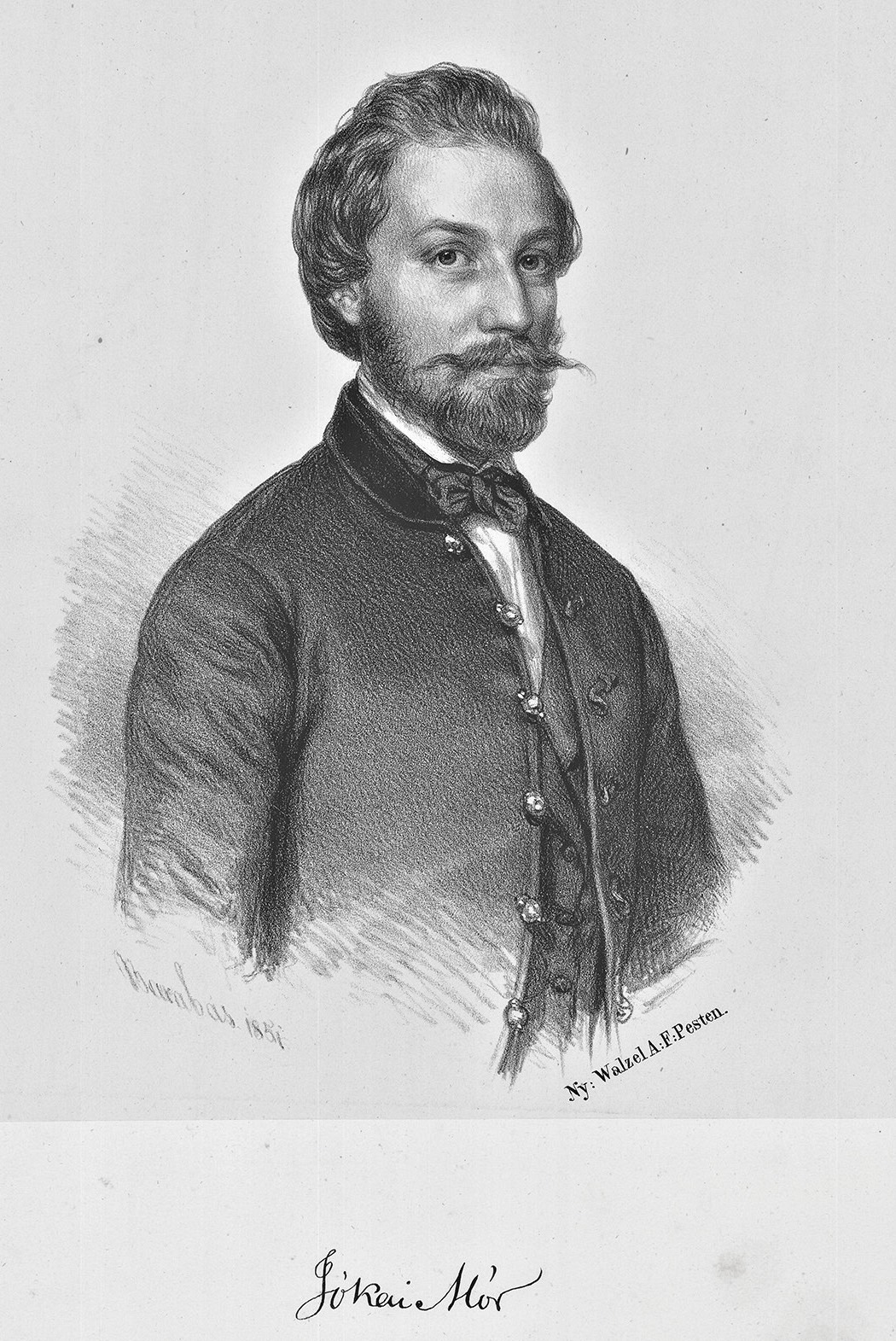
| Mór
Jókai |
Growing up in Sydney, then through high school in Seattle, I read voraciously. Enid Blyton wrote over twenty books in the children's series,
The Famous Five, and another seventeen in
The Secret Seven series. I probably read most of them, if not all. Then my sister was reading breast-heaving novels by Georgette Heyer who wrote over forty-eight of them. I probably red six or a dozen.
I graduated to several novels by Dickens, Jane Austin, Emily and Charlotte Brontë, and even Thackeray's Barry Lyndon before tackling Herman Hesse's Steppenwolf and Magister Ludi, Tolstoy's War and Peace, and Dostoevsky's Brothers Karamazov, Anna Karenina, and Crime and Punishment.
I would devour novels. It took me only three weeks to read War and Peace, one day to read Jane Eyre, and a week to get through Tolkien's Lord of the Rings trilogy. I was that eager to find out what happens at the end.
Law school cured me of the reading habit. I had to read so many legal opinions, my eyesight grew weak and, frankly, I was burned out. Pretty much all I read was non-fiction. In more recent years, thanks to the encouragement of my sister who had passed on those Georgette Heyer novels, I became fascinated reading a translation of Les Miserables. It took me a couple of months or more to get to the end.
Two years ago I tackled Egri csillagok ("The Stars of Eger"), the Hungarian historical novel which is one of the most widely read books in Hungarian literature. I purchased an English translation, became dissatisfied with it when I compared it to the original Hungarian text, and spent a year on my own translation. (Copies available at Lulu.com.)
As I approach retirement, I am thinking maybe I should take up reading more seriously. I spent $1.99 on another Hungarian novel, an e-book version of a 19th century English translation of another Hungarian historical novel,
The Golden Age in Transylvania by Mór
Jókai. That was slow reading. I was bothered by the translation. As with
Egri csillagok, I downloaded the Hungarian original,
Erdély
aranykora, as a text file from the web.
I became dissatisfied with the Victorian English translation as I compared it to the Hungarian original and decided to make my own translation. That was twenty-four days ago. I just finished the translation this morning. The initial hard work of translation is done and my eagerness to find out what happens at the end has been satisfied. At least for this novel, I not only devoured it, I ruminated over the meaning of each sentence before going onto the next.
The novel really is a page-turner. It is a written historical novel set in the semi-independent Principality of Transylvania in the years 1661-1674.
It is also a psychological novel with historical characters that have depth and evolve.
In some chapters, the novel is a fantasy with detailed descriptions of exotic oriental pleasure palaces set in the remote mountains of Transylvania and the northern Carpathians. Translating Jókai's descriptions of forest streams, craggy mountains, polished rock cirques, and even an avalanche brought back my own memories of hiking in the Cascades and Olympic Mountains. Clearly, the author had visited and observed such places. The Victorian translation either omitted these vivid descriptions or condensed them into a short paragraph.
 |
A Reclining Odalisque,
by Gustave Léonard de Jonghe, c. 1870 |
Then there is many a passionate breast-heaving scene, which portions the Victorian translation also omitted, and a generous sense of comedy, sometimes slapstick, often subtle. Jókai knew very well how to appeal to a broad audience of human emotions.
Chapters bounce back and forth in time and from scene to scene. Connections develop as the novel progresses, and seemingly inconsequential details and the occasional obvious clue assume necessary significance in a later chapter. The chapters are like scenes in a play, and Jókai's descriptions of the characters' emotions and thoughts are like a playwright's directions to actors on a stage.
The fantasy scenes are an allegory and the themes are hubris and the seductions of wielding and manipulating power. It is a novel about a national tragedy.
 |
Mór
Jókai in his study
|
Jókai participated in ill-fated Hungarian war of independence, 1848-1849, and kept a low political profile for the following fourteen years during which he wrote some thirty novels.
The Golden Age in Transylvania was published in 1852. After the Great Compromise of 1867 established the dual monarchy of Austro-Hungary, he was even more prolific: several hundred volumes. His novels were translated and very popular in Victorian Britain, even with the Queen herself.
There is lots of material to satisfy my need for a hobby. I have a new way of reading. Instead of quickly reading a novel to simply take in the plot, having to translate slows me down to appreciate and admire the details.
The hard cover of my treasured Hungarian-English dictionary is beginning to wear and tear at the folds. I am addicted to not only Google translate (mis-translations often great for a good chuckle), but also to Google's Hungarian dictionary that often holds clues to decipher archaic or unusual Hungarian words. Often I had to get up and pace, maybe make another cup of coffee, before the meaning of a baffling, obscure and convoluted (to an English reader) Hungarian sentence pops into my mind.
As I walk Nazar the Wonder Dog in the wash, my mind is full of prose.